
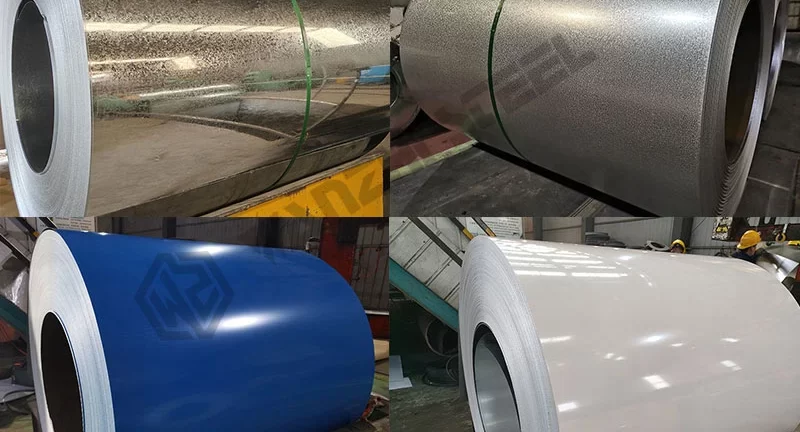
When choosing roofing coils for industrial use, two common options dominate the market: GI (Galvanized Iron) and PPGI (Pre-Painted Galvanized Iron). While both share a base of galvanized steel, their properties, costs, and applications differ significantly. Let’s dive into the comparison to help you make the right choice.
What Are GI and PPGI Coils?
- GI Coils: Cold-rolled steel coated with zinc to prevent corrosion.
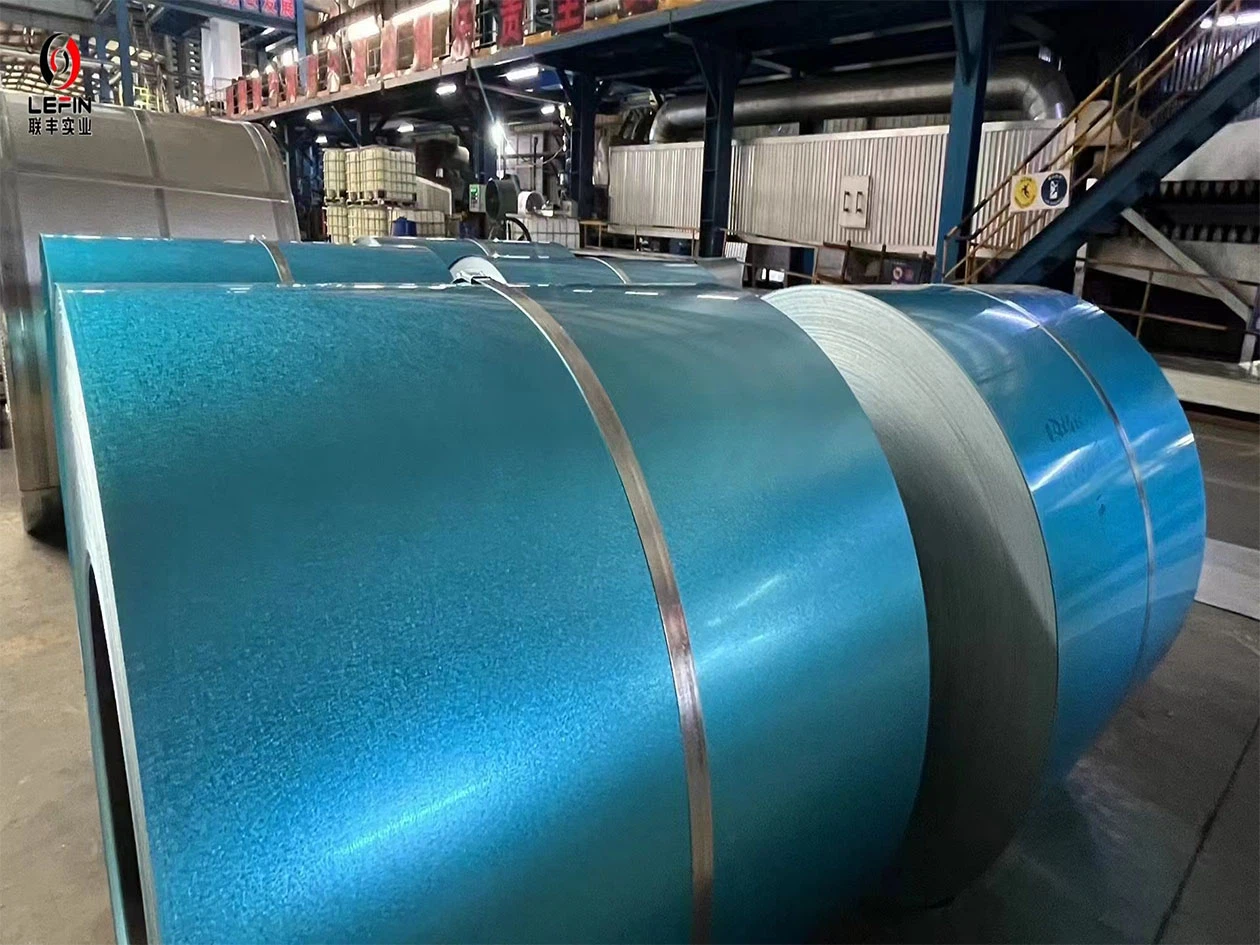
- PPGI Coils: GI sheets with an added paint layer for aesthetics and additional protection.
Key Comparison Factors
- Corrosion Resistance:
- GI: Basic protection from rust
- PPGI: Extra resistance due to paint layer
- Appearance:
- GI: Plain silver or grey
- PPGI: Multiple color and texture options
- Cost:
- GI: Cheaper upfront
- PPGI: Slightly higher due to added coating
- Lifespan:
- GI: 5–10 years in moderate weather
- PPGI: 10–20 years depending on coating
- Application Areas:
- GI: Internal parts, temporary sheds
- PPGI: External roofing, facades, visible structures
Which One Should You Choose?
- Choose GI Coils if: Budget is limited or roofing is temporary
- Choose PPGI Coils if: Appearance, branding, and longer lifespan are priorities
Tips for Buyers
- Verify coating thickness: Z120 and Z150 are standard for durability
- Ask for RAL color samples (for PPGI)
- Ensure mill test certificate (MTC) and quality report
Conclusion:
Both GI and PPGI coils have their place in industrial roofing. Choose based on your project’s longevity, aesthetic needs, and environmental exposure.